For those looking for secure ways to manage or verify email lists, it is recommended to use official API services from reputable providers that comply with Acceptable Use Policies and data privacy laws. Malware analysis maksim.rar Malicious activity - ANY.RUN

: The tool connects to mail servers (via protocols like IMAP or POP3) to confirm if a set of credentials (email and password) is active and accessible. Service Searching

: Security researchers from platforms like ANY.RUN and Hybrid Analysis often classify the executable files associated with Hackus as malicious or suspicious .

To avoid being blocked by email providers like Gmail or Outlook, it often utilizes proxy lists to rotate IP addresses.

Defending against automated credential validation requires a multi-layered security approach focusing on authentication barriers and bot detection. 1. Implement Multi-Factor Authentication (MFA)

The Hackus Mail Checker exists in a legal and ethical gray area. While its technical description suggests legitimate email management functions, the overwhelming evidence points to its primary real-world application as a credential validation tool for cybercriminals. The leaked cracked versions, confirmed malware distributions, and association with Trojan infections make downloading or using HMC a significant security risk.

The user defines how many threads to run. More threads mean faster checking but require more system resources and higher-quality proxies. Timeouts are set to dictate how long the software should wait for a mail server to respond before marking it as an error. 4. Execution and Validation

The utility of a mail checker depends entirely on the intent of the operator. The technology itself is dual-use, meaning it has both legitimate administrative applications and malicious cybersecurity implications. Legitimate and Professional Uses

Bulk email verification services that check syntax and domain health without invading user privacy or risking security blocks.

Searching for, downloading, and cracked versions of Hackus Mail Checker poses severe risks:

| Practice | Why It Matters | |---|---| | | A stolen password alone is insufficient for account access | | Use unique passwords for each service | A data breach on one platform doesn‘t compromise others | | Monitor haveibeenpwned.com | Receive alerts when your email appears in known data breaches | | Review connected apps and devices | Revoke access for unfamiliar applications periodically | | Be cautious of unsolicited downloads | Cracked and unofficial software is a primary malware vector |

Validated accounts are instantly saved to a separate output file for the user. Common Use Cases

If you are a security researcher or system administrator looking to test your organization's defenses against unauthorized access attempts.

A mail checker is an automated tool designed to verify if a list of email addresses is valid or if specific credentials (username and password) work on various email providers. While these tools can be used by legitimate system administrators to clean mailing lists, they are more commonly utilized in the "cracking" community to test stolen databases against major mail services like Gmail, Outlook, or Yahoo.

How It Works ⚙️

Simple, intuitive design tools at your fingertips

Hackus Mail Checker Exclusive <95% LEGIT>

For those looking for secure ways to manage or verify email lists, it is recommended to use official API services from reputable providers that comply with Acceptable Use Policies and data privacy laws. Malware analysis maksim.rar Malicious activity - ANY.RUN

: The tool connects to mail servers (via protocols like IMAP or POP3) to confirm if a set of credentials (email and password) is active and accessible. Service Searching

: Security researchers from platforms like ANY.RUN and Hybrid Analysis often classify the executable files associated with Hackus as malicious or suspicious .

To avoid being blocked by email providers like Gmail or Outlook, it often utilizes proxy lists to rotate IP addresses. hackus mail checker

Defending against automated credential validation requires a multi-layered security approach focusing on authentication barriers and bot detection. 1. Implement Multi-Factor Authentication (MFA)

The Hackus Mail Checker exists in a legal and ethical gray area. While its technical description suggests legitimate email management functions, the overwhelming evidence points to its primary real-world application as a credential validation tool for cybercriminals. The leaked cracked versions, confirmed malware distributions, and association with Trojan infections make downloading or using HMC a significant security risk.

The user defines how many threads to run. More threads mean faster checking but require more system resources and higher-quality proxies. Timeouts are set to dictate how long the software should wait for a mail server to respond before marking it as an error. 4. Execution and Validation For those looking for secure ways to manage

The utility of a mail checker depends entirely on the intent of the operator. The technology itself is dual-use, meaning it has both legitimate administrative applications and malicious cybersecurity implications. Legitimate and Professional Uses

Bulk email verification services that check syntax and domain health without invading user privacy or risking security blocks.

Searching for, downloading, and cracked versions of Hackus Mail Checker poses severe risks: To avoid being blocked by email providers like

| Practice | Why It Matters | |---|---| | | A stolen password alone is insufficient for account access | | Use unique passwords for each service | A data breach on one platform doesn‘t compromise others | | Monitor haveibeenpwned.com | Receive alerts when your email appears in known data breaches | | Review connected apps and devices | Revoke access for unfamiliar applications periodically | | Be cautious of unsolicited downloads | Cracked and unofficial software is a primary malware vector |

Validated accounts are instantly saved to a separate output file for the user. Common Use Cases

If you are a security researcher or system administrator looking to test your organization's defenses against unauthorized access attempts.

A mail checker is an automated tool designed to verify if a list of email addresses is valid or if specific credentials (username and password) work on various email providers. While these tools can be used by legitimate system administrators to clean mailing lists, they are more commonly utilized in the "cracking" community to test stolen databases against major mail services like Gmail, Outlook, or Yahoo.
2

Activate the Tool

Click on the extension icon and select the tool you need, or use the right-click context menu.

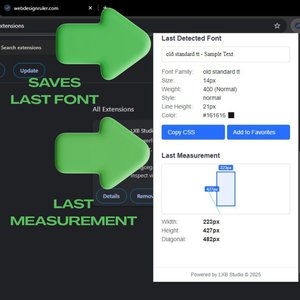
Extension dropdown menu with tool options
3

Use with Precision

Interact with the webpage to measure elements, identify fonts, or pick colors with pixel-perfect accuracy.

Measurement tool in action on a webpage

Installation Guide 💻

Install Web Design Ruler from official stores or as an unpacked extension

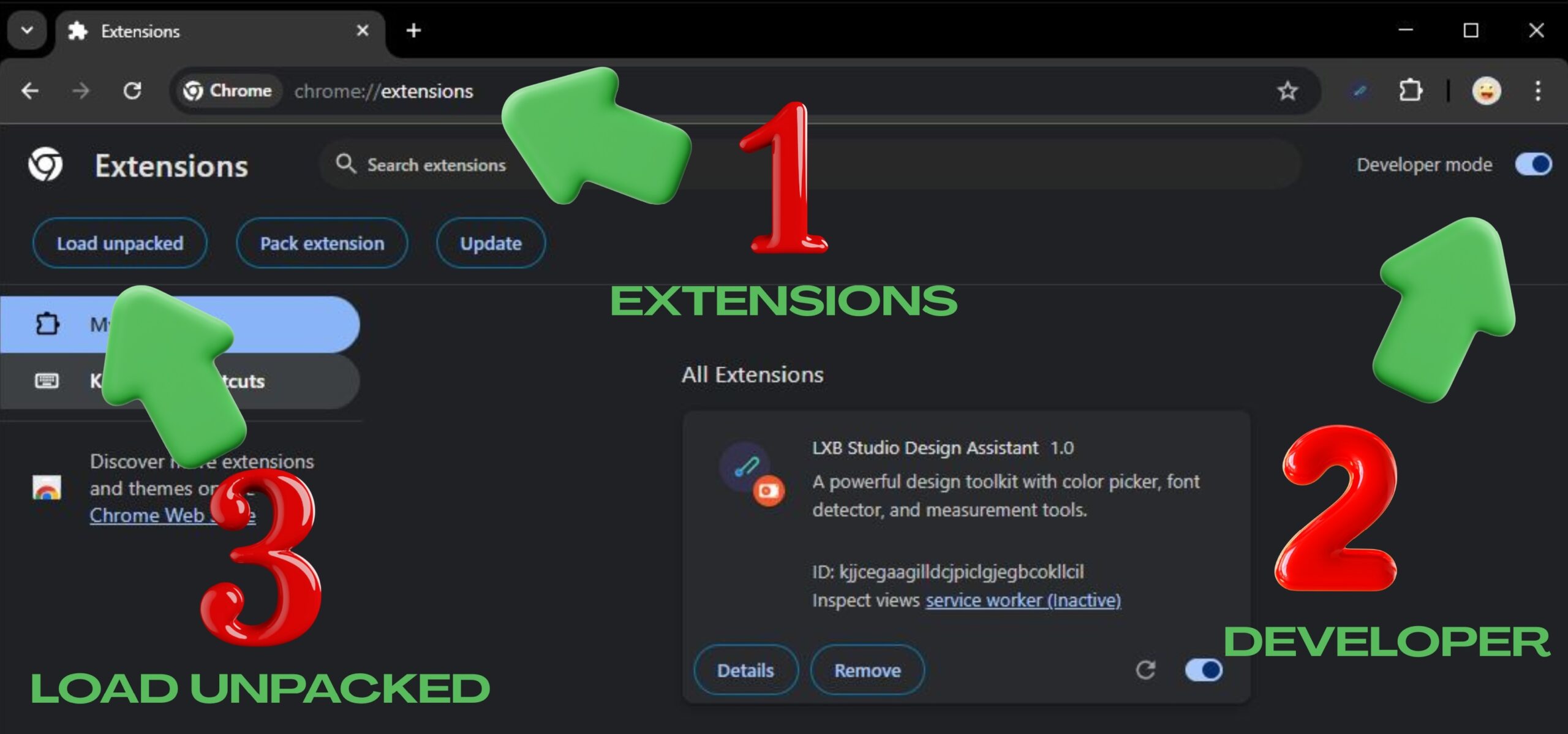
Chrome extensions page showing load unpacked process

Install from Official Stores (Best)

For Chrome: Visit the Chrome Web Store and click "Add to Chrome". For Firefox: Visit Firefox Add-ons and click "Add to Firefox".

Or Download Extension Files

Download the Web Design Ruler extension files from this website. Save the ZIP file to your computer and extract it.

Open Extensions Page

For Chrome: Type chrome://extensions in the address bar. For Firefox: Type about:addons in the address bar.

Enable Developer Mode (Chrome Only)

Toggle on the "Developer mode" switch in the top-right corner of the Extensions page.

Load Unpacked Extension

Click the "Load unpacked" button and navigate to the folder where you extracted the extension files. Select the folder and click "Select Folder".

⚠️ Important Warning for Manual Installation

Do not delete or move the extension folder after installation. Since this is an unpacked extension, Chrome needs the folder to remain in its original location. If you delete or move the folder, the extension will stop working.

Privacy & Security 🔒

Your privacy and security are our top priorities

No Data Collection

Web Design Ruler operates entirely on your device. We don't collect, store, or transmit any of your data or browsing history to our servers or third parties.

Limited Permissions

Our extension only requests the minimum permissions needed to function. We can only access the active tab when you explicitly activate one of our tools.

Clean Code

No ads, no trackers, no bloat. The extension is built with clean, efficient code focused solely on providing helpful design tools.

Open

The extension is built with transparent practices. You can inspect the code yourself since it's installed as an unpacked extension.

Malware-Free

Our extension contains no malware or harmful code. It's a simple, focused tool created by designers for designers at LXB Studio.

Works Offline

All functionality works completely offline. No internet connection is required for the tools to operate after installation.

Why We Built This 💡

As web designers and developers at LXB Studio, we often found ourselves switching between multiple tools to measure elements, identify fonts, and pick colors from websites. This workflow was inefficient and interrupted our creative process.

We built Web Design Ruler to solve these pain points and create a streamlined workflow for ourselves and the design community.

  • Eliminate the need for multiple extensions.
  • Create pixel-perfect designs with accurate measurements.
  • Identify and replicate beautiful typography.
  • Extract exact colors for design consistency.
  • Speed up the web design process.

We've made it free and open because we believe in giving back to the design community that has given us so much.

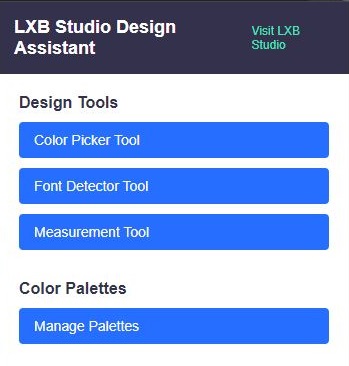
Web Design Ruler extension popup interface

Frequently Asked Questions ❓

Got questions? We've got answers

Which browsers are supported?

Web Design Ruler works with Google Chrome, Firefox, and Chromium-based browsers like Microsoft Edge, Brave, Opera, and Vivaldi. Install from the Chrome Web Store, Firefox Add-ons, or download the extension files directly.

Is Web Design Ruler free to use?

Yes! Web Design Ruler is completely free to use. We created it to simplify web design workflows and give back to the design community.

Can I use the extension on any website?

Yes, you can use Web Design Ruler on any website. However, it cannot be used on browser pages like the Chrome Web Store, Settings, or New Tab page due to Chrome's security restrictions.

Why is it distributed as an unpacked extension?

We offer both options! You can install from official stores (Chrome Web Store and Firefox Add-ons) or download it as an unpacked extension for those who prefer manual installation or want to inspect the code.

Why can't I delete the extension folder?

Chrome loads unpacked extensions directly from the folder location you specify during installation. If you delete or move this folder, Chrome can no longer find the extension files, and it will stop working. This is different from extensions installed from the Chrome Web Store, which are stored in Chrome's internal storage.

How accurate are the measurements?

The measurement tool provides pixel-perfect accuracy based on the rendered elements in the browser. It measures exactly what you see on screen.

Can it identify all fonts?

The font detector can identify any font that's actively loaded and applied to text on the webpage. It cannot identify fonts in images or custom fonts that use non-standard loading methods.

How do I report bugs or request features?

We welcome your feedback! Please contact us through our contact page to report bugs or suggest new features.

Ready to Design with Precision? 🚀

Download Web Design Ruler today and transform your web design workflow with powerful measurement, font identification, and color picking tools.

Get Started Now