|
Aura |
Nature Soundscape Player |
freeware version 2.8.10d.213
for Windows,
for Mac OS,
for Linux.
Belorussian, Bulgarian, Czech, English, French, German, Italian, Japanese, Korean, Polish, Portuguese, Russian, Serbian, Chinese simplified and traditional, Spanish, Ukrainian
languages are embedded
Aura is a desktop utility that uses soothing nature sounds in order to create a comfortable atmosphere. |
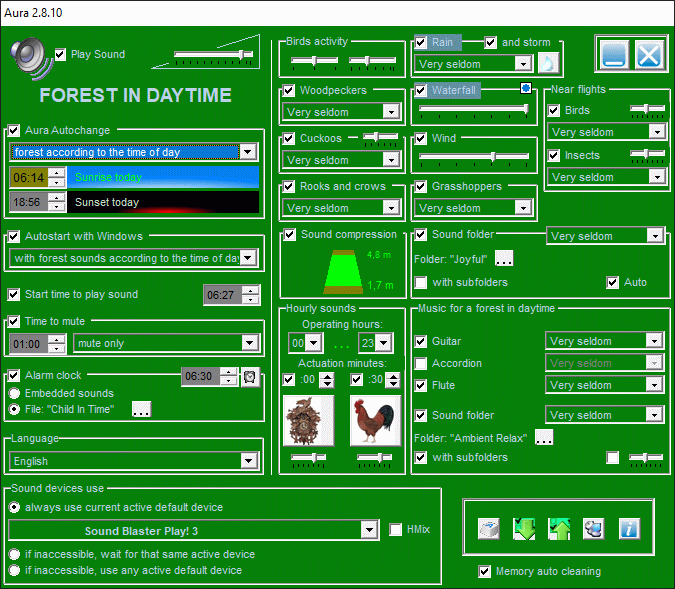
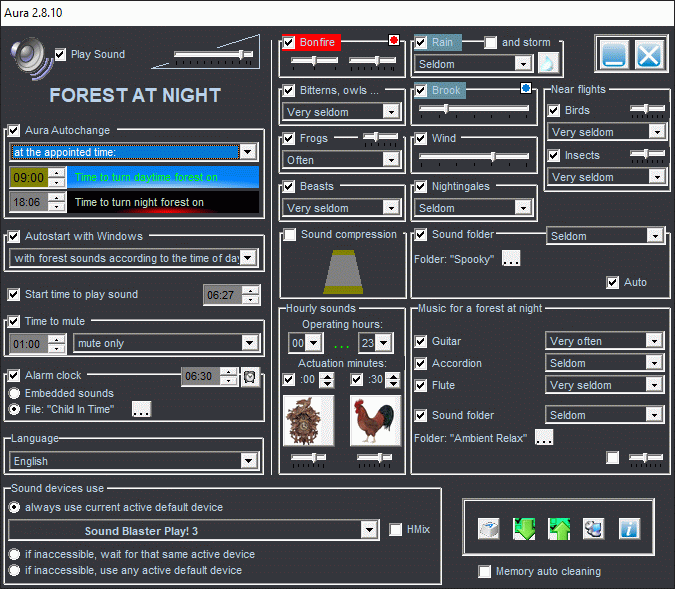
Here you can select between a daytime and nighttime forest environment Move your computer outdoors! |
Download:
File Aura.zip (232,380 K)
from
umopit.ru or yandex.disk
To run Aura on Mac OS use CrossOver Mac or WineBottler and these or these icons.
To run Aura on Linux use CrossOver Linux or Wine.
Entertaining? Yes. But also a mirror: Japan doesn’t just make content. It creates ecosystems of belonging.
: Talent agencies tightly manage artist images, training performers in singing, dancing, acting, and public relations.
The Japanese music market is the second largest in the world, historically driven by J-Pop and a hyper-specific phenomenon known as "Idol Culture."
Understanding this powerhouse requires looking past individual anime or video games. It demands an examination of how historical roots, unique business frameworks, and passionate fan cultures interact to create a global phenomenon. The Dual DNA: Tradition Meets Tomorrow
In the sprawling metropolis of Tokyo, where neon-lit skyscrapers stand beside ancient shrines, a cultural superpower operates 24 hours a day. The Japanese entertainment industry is far more than just "anime and sushi." It is a complex, multi-layered ecosystem of television, music, film, video games, and live performance. While Hollywood chases blockbuster spectacle and K-Pop drives synchronized global streaming, Japan remains a distinct outlier—a market that is simultaneously insular, wildly innovative, and increasingly dominant in global pop culture. heyzo 0415 aino nami jav uncensored link
To understand modern Japan, one must understand how its people entertain themselves, and how those entertainment forms—from J-Pop idols to Kaiju films—have reshaped the childhoods of millions worldwide.
Central to J-Pop is the "idol" phenomenon—young performers marketed for their personality, growth, and relatability rather than raw musical talent alone. Groups like AKB48 and Nogizaka46 pioneered handshake events and fan voting systems, turning music consumption into a highly participatory subculture. Alternative Subgenres and Virtual Artists
: This term translates to "the art of making things." It represents a dedication to craftsmanship, high quality, and meticulous attention to detail. This pride in craftsmanship is evident in the precise animation of Studio Ghibli and the complex mechanics of Japanese video games.
Western music industries focus on the album; Japan focuses on the personality . The cornerstone of the modern Japanese music scene is the . Entertaining
Japanese dramas ( Dorama ) are typically 9-11 episodes long. They are tight, character-driven, and rarely get second seasons. Hits like Hanzawa Naoki (banking revenge) or Nigeru wa Haji da ga Yaku ni Tatsu (romance) achieve ratings that US shows can only dream of. Unlike Western binge-watching, Japan still values the "water cooler" weekly broadcast.
: Hyper-focused narratives about everyday, ordinary experiences. The J-Pop and Idol Phenomenon
Here is a deep dive into the mechanisms that drive Japan’s cultural export:
: Successful manga quickly transition into animated series, capturing international audiences through streaming platforms. It creates ecosystems of belonging
Japan’s entertainment industry is a global powerhouse—but its influence goes far beyond the screen or stage. It's a mirror of the country’s unique cultural values, discipline, and creativity.
Unlike Western comics, which historically focused on superheroes, manga and anime cater to every demographic and age group:
The Japanese music scene is the second largest in the world, dominated by a unique "Idol" culture. Groups like AKB48 or Johnny & Associates’ boy bands are built on the concept of "idols you can meet."
If on some reason you can't use Live Update from the program,
please check in Aura Information for missing or old components,
choose them from the following table, download and run.
Please begin from the Program Shell:
| Update name | Version | Size |
| The program shell update | 2.8.10m | 2,478 K |
| Background sounds of daylight forest | 17 | 1,419 K |
| Winged daylight foresters | 23 | 6,001 K |
| Rooks and crows in daytime forest | 9 | 1,114 K |
| Woodpeckers | 1 | 361 K |
| Cuckoos | 1 | 1,076 K |
| Grasshoppers | 6 | 16,335 K |
| Background sounds of night forest | 21 | 8,747 K |
| Winged foresters in the night | 19 | 4,066 K |
| Nightingales | 2 | 2,427 K |
| Frogs | 1 | 3,686 K |
| Beasts in the night | 6 | 1,241 K |
| Near flights of birds | 4 | 819 K |
| Near flights of insects | 7 | 1,188 K |
| Wind in a forest | 1 | 2,238 K |
| Brook and waterfall | 6 | 538 K |
| Rain | 5 | 2,930 K |
| Thunder Roarings (sound only with Rain!) | 7 | 8,237 K |
| Bonfire | 5 | 585 K |
| Guitar | 44 | 117,788 K |
| Accordion | 11 | 44,637 K |
| Flute | 11 | 18,049 K |
| Hourly sounds | 4 | 2,893 K |
| Sounds for alarm clock | 5 | 5,472 K |

